Natural Wonders of Winter: Apostle Islands Ice Caves

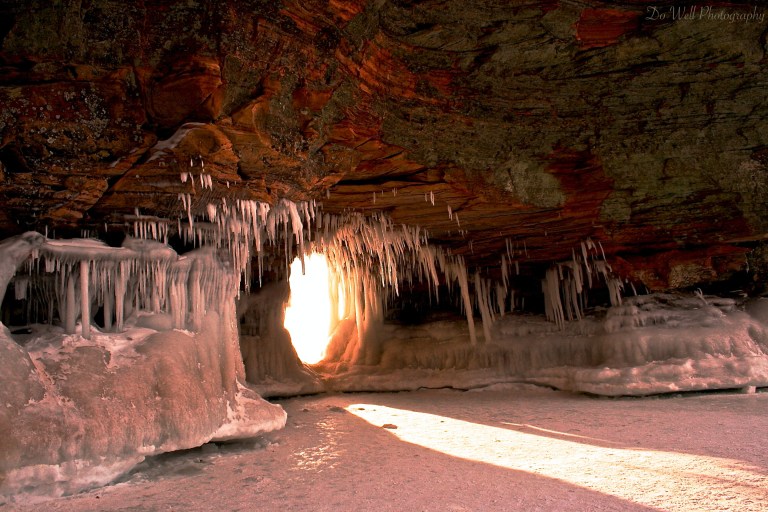
If you live in MN or WI, you have most likely heard of the Apostle Islands Ice Caves on Lake Superior…maybe you even had a chance to visit. This winter, harsh and chilly as it may be, does have some positive attributes. This persistent cold created the perfect conditions for expansive ice formation across the entire Great Lakes system, the most ice coverage since 1994. With quite a few mild winters in the past years, we have not had the opportunity to explore all winter has to offer, including some amazing examples of nature’s architecture. This year on Wisconsin’s northern shore of Lake Superior, an ice bridge has formed from the mainland to the Apostle Islands, where many sea caves have developed stunning chandeliers of icicles and multitudes of cool ice formations. With the lake frozen over, people can explore these rarely seen caves on foot and marvel at the geological formations of sandstone and ice. These caves are an example of Winter’s Natural Wonders, and are quite the sight to see. This past week I had the chance to explore the caves, below are some of my photos.

If you live in the Great Lakes area, I would strongly suggest making a visit to the sea caves. Plan for a whole day adventure, and try and go on a weekday-these are a growing tourist attraction! If you are planning a visit, check out these resources.

Weathering the Winter, Singing for Spring

This winter has been one for the record books. With more snow than we have had in years and long bouts of bitter cold temperatures, we Minnesotans have been weathering the many different winter storms and unprecedented cold. We survived the cruel visit from the polar vortex, are shoveling ourselves out of winter storm Nika, and have our sights set on spring. We are not alone in our tribulations. Throughout winter a cold hearty, feathery friend has been keeping us company, pulling through the winter, and now signaling that spring will actually arrive.

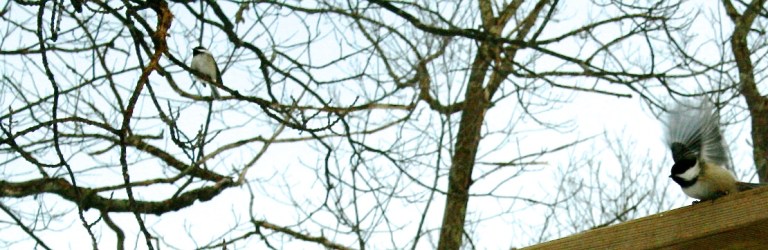
The Black-Capped Chickadee weathers winter as well as any tough Northerner. A small and common songbird, weighing only about 10 grams, stays up and active throughout the winter season. The chickadee is a curious songbird interested in learning all it can about its territory, even the human inhabitants. Thus, a chickadee is a common bird to see at feeders, and is easily identified by its small rotund shape, distinct black cap, and various songs. Even in the blustering cold and snow, the chickadee is commonly seen visiting the feeder and flying with the flock.The chickadee possesses a few great tools to make it through a tough winter; from staying warm, to finding friends.

Winter Survival Guide, Black-Capped Chickadee Edition:

1. Expand your Brain. Literally. Every fall the chickadee expands the part of its brain responsible for spatial memory (the hippocampus). By increasing the brain capacity by 30% the chickadee can work to gather and store food for the winter, then recall where dinner is on the worst winter day.

2. Insulate. A chickadee’s spherical shape is mostly feathers. A thick down layer covers a tiny body to insulate in the cold winter months.

3. Just keep eating. In the winter, chickadees eat enough seeds and berries to put on 10% of their body weight in one day, and in one night it is all burned off.

4. Get a little help from your friends. A chickadee flock uses multiple calls and songs to communicate with one another, and in the winter often associates with other bird species, such as; nuthatches, woodpeckers, kinglets, creepers, warblers and vireos.

The chickadee has survived the majority of winter and has its sight set on warmer days, more food, and mating season – oh the wonders of spring. As daylight increases, so do their songs; raising our hopes for the end of this relentless winter. When the sun shines again, listen for the “SPRING time” call of the chickadee. As the frequency of the song increases, the days of winter dwindle down, signaling to us that spring is truly not too far away.