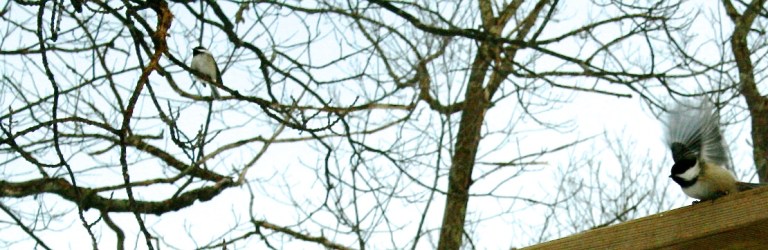
This winter has been one for the record books. With more snow than we have had in years and long bouts of bitter cold temperatures, we Minnesotans have been weathering the many different winter storms and unprecedented cold. We survived the cruel visit from the polar vortex, are shoveling ourselves out of winter storm Nika, and have our sights set on spring. We are not alone in our tribulations. Throughout winter a cold hearty, feathery friend has been keeping us company, pulling through the winter, and now signaling that spring will actually arrive.
The Black-Capped Chickadee weathers winter as well as any tough Northerner. A small and common songbird, weighing only about 10 grams, stays up and active throughout the winter season. The chickadee is a curious songbird interested in learning all it can about its territory, even the human inhabitants. Thus, a chickadee is a common bird to see at feeders, and is easily identified by its small rotund shape, distinct black cap, and various songs. Even in the blustering cold and snow, the chickadee is commonly seen visiting the feeder and flying with the flock.The chickadee possesses a few great tools to make it through a tough winter; from staying warm, to finding friends.
Winter Survival Guide, Black-Capped Chickadee Edition:
1. Expand your Brain. Literally. Every fall the chickadee expands the part of its brain responsible for spatial memory (the hippocampus). By increasing the brain capacity by 30% the chickadee can work to gather and store food for the winter, then recall where dinner is on the worst winter day.
2. Insulate. A chickadee’s spherical shape is mostly feathers. A thick down layer covers a tiny body to insulate in the cold winter months.
3. Just keep eating. In the winter, chickadees eat enough seeds and berries to put on 10% of their body weight in one day, and in one night it is all burned off.
4. Get a little help from your friends. A chickadee flock uses multiple calls and songs to communicate with one another, and in the winter often associates with other bird species, such as; nuthatches, woodpeckers, kinglets, creepers, warblers and vireos.
The chickadee has survived the majority of winter and has its sight set on warmer days, more food, and mating season – oh the wonders of spring. As daylight increases, so do their songs; raising our hopes for the end of this relentless winter. When the sun shines again, listen for the “SPRING time” call of the chickadee. As the frequency of the song increases, the days of winter dwindle down, signaling to us that spring is truly not too far away.
 MN Naturalist
Nice post! The hippocampus stuff is new to me, but makes a lot of biological sense. Thanks for sharing!
LikeLike